Friday, February 10, 2012

Ghana to review mining stability agreements

Ghana, Africa’s second-largest gold mining state, has set up a committee to review stability investment agreements with mining houses, a senior government official said yesterday.
“It will include all companies that have stability agreements,” Benjamin Aryee, the chief executive of Ghana’s Minerals Commission, told Reuters on the sidelines of an industry conference in Cape Town.
“Ghana believes in the sanctity of contracts. But in all contracts there are review provisions,” he said.
Ghana’s finance minister initially unveiled the plan to review mining stability agreements in October. The government has since detailed plans to raise the corporate mining tax to 35 percent from 25 percent and introduce a 10 percent windfall tax as well to boost the state share of revenues.
The country set up a committee to review and renegotiate mining contracts last week.
Mining companies that have had stability agreements in Ghana include South Africa-based AngloGold Ashanti, the world’s third largest gold producer.
Gold Fields, the world’s fourth largest gold producer company, has said such a move might kill planned projects that could bring $1 billion of investment into the West African nation.
Ghana’s review comes against the backdrop of a surge of resource nationalism across Africa as governments aim to extract move revenue from a sector that has failed to translate mineral wealth into broad prosperity. (Reuters)

Kwara, NERFUND to provide N500m for SMEs


Kwara State government and the National Economic Reconstruction Fund have set aside N500 million to develop small businesses in the state, the state commissioner for commerce and cooperative, Alhaji Saka Omimago has said.
The state government has provided N250 million, while NERFUND will provide the remaining balance of N250 million, Omimago said at a meeting with some Microfinance Bank executives on Wednesday.
The fund, which would be given as soft loan to assist Small Scale Enterprises (SMEs), would be disbursed in two phases through some identified microfinance banks, the commissioner said.
He said the loan was to empower artisans, market women associations, youths and professionals who may not have access to fund to improve their businesses.

Thursday, February 9, 2012

Nigerian 2011 Air passenger demand grew by 6% – IATA


Written by Chris Agabi, Lagos Thursday, 09 February 2012 05:00 The International Air Transport Association (IATA) has reported that the year 2011 passenger demand rose 5.9 per cent compared to 2010, in line with long-term growth trends.
In contrast, cargo markets contracted by 0.7 percent for the year; but recorded positive demand growth in December of 0.2 percent, IATA said.
The breakdown of the industry performance showed a “growth in demand lagged capacity increases at 6.3 percent (passenger) and 4.1 percent (cargo) putting downward pressure on load factors. The average passenger load factor for 2011 was 78.1 percent, down from 78.3 percent in 2010, while the freight load factor was just 45.9 percent, down from 48.1percent in 2010.”
Tony Tyler, IATA’s Director General and CEO said “Given the weak conditions in Western economies, the passenger market held up well in 2011. But overall 2011 was a year of contrasts. Healthy passenger growth, primarily in the first half of the year, was offset by a declining cargo market. Optimism in China contrasted with gloom in Europe. Ironically, the weak euro supported business travel demand. But Europe’s primarily tax and restrict approach to aviation policy left the continent’s carriers with the weakest profitability among the industry’s major regions. Cautious improving business confidence is good news. But 2012 is still going to be a tough year.”
Passenger demand for December rose 5.4 percent compared to the same month in 2010. But the trend since mid-year has clearly slowed, as travel markets react with a lag to the declines in confidence that weakened cargo in the second half of 2011. Comparisons with December 2010 are also distorted as severe winter weather in Europe and North America as well as strikes in Europe suppressed demand. December 2011 passenger demand was up just 0.7 percent over November while the load factor declined 0.2 percentage points. Freight capacity climbed 4.4 percent in December compared to December 2010. The freight load factor was just 46.1 percent for the month.
International air travel rose 6.9 percent last year IATA said but noted that, the majority of this growth occurred in the first half of the year.
International capacity climbed 8.2 percent, pushing the passenger load factor down to 77.4 percent. For December, international traffic climbed 6.4 percent year over year, in part owing to depressed traffic levels in 2010 in North American and Europe, and rose 1.4 percent compared to November.
European carriers posted the second highest growth rates, behind Latin American carriers. Demand rose 9.5 percent last year while capacity climbed 10.2 percent, resulting in a load factor of 78.9 percent.
African airlines saw travel demand fall 0.7 percent for December, but it rose 2.3 percent for the full year it said.
“This relatively weak performance was in part owing to the civil unrest in a number of North African countries. However, good economic performance in the region was also generating significant demand for air travel. African airlines were unable to fully benefit and their low growth represents a loss of market share. Capacity climbed just 0.2 percent for December and 4.4 percent for the 12 months. Load factors were the weakest in the industry at 68.9 percent for December and 67.2 percent for the full year” it said.
“Improving business confidence and encouraging news from the US economy are heartening developments. But it is far too early to start predicting a soft landing for 2012. The euro zone crisis is far from over. Failure to achieve a durable solution will have dire consequences for economies around the world. And it would most certainly tip the airline industry into the red,” said Tyler.

Etihad airways begins flight into Nigeria

Written by Chris Agabi, Lagos Thursday, 09 February 2012 05:00
ShareEtihad Airways Monday announced the launch of flights to Lagos, the airline’s first destination in West Africa, from July 1, subject to regulatory approvals.

Lagos becomes the 83rd destination in Etihad Airways’ global network and the return flights will create a new link between Nigeria, Africa’s third largest economy, and the United Arab Emirates.
The direct flights will link Abu Dhabi and Lagos six times a week and will be operated by a two class A330-200 aircraft with 22 Pearl Business class and 240 Coral Economy seats.
Following the launch of services to the Seychelles in November 2011, Tripoli last month and Nairobi in April, the addition of Nigeria marks another milestone in Etihad Airways’ African expansion plans.
James Hogan, Etihad Airways President and Chief Executive Officer, said, “The launch of services to Lagos is consistent with our strategy of targeting areas of strong growth in emerging markets.
“The United Arab Emirates is a major trade partner of Nigeria, which has a population of more than 150 million people, the largest in Africa and the seventh biggest in the world.
“The country is rich in natural resources, such as oil and natural gas. Our new point-to-point services will strengthen the oil and gas links between the UAE and Nigeria and facilitate further growth in these industries.

MEND’s threat frightens Nigeria oil industry operators


*JTF put men on alert
Emma Amaize
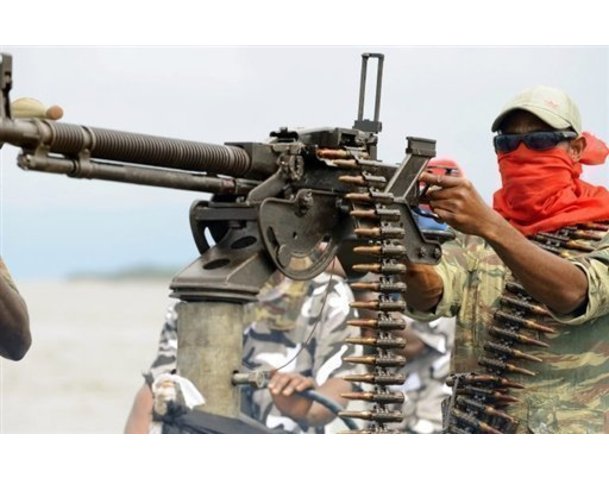
08 February 2012, Sweetcrude, WARRI- FEAR enveloped the oil industry, Wednesday, as the fear-provoking militant group, Movement for the Emancipation of the Niger-Delta, MEND, renewed, its warning to carry out more serious attacks on the Nigerian oil industry in the next few weeks.
In response to the threat, however, the Joint Task Force, codenamed, Operation Pulo Shield, which dismissed the forewarning as propaganda, has put its men on the alert in the Niger-Delta.
Investigations showed that oil companies, including Shell Nigeria Exploration and Production Company, SNPEC, Chevron Nigeria Limited, Agip and others, have put in place some measures, which an industry source described as “normal” to avert danger.
Corporate Media Relations Manager of SNPEC, Mr. Tony Okonedo, while speaking on Wednesday, said, “We continue to take normal precautions for our staff and facilities, but government is actually in-charge of security”.
It was gathered that some oil companies were already recalling expatriates from the locations in the creeks to the cities because they would be easy target for abduction by militants in the swampy locations.
Some of the workers in the creeks have also indicated interest to return onshore so as not to be caught in an awkward situation.
Media coordinator of JTF, Lt. Col Timothy Antigha had in a press statement stated that those who issued the warning in the name of MEND were impostors that want to swindle Niger Deltans by appropriating the identity of the estwhile leadership of MEND to advance their selfish interest.
“For the avoidance of doubt, people who were the leadership of MEND are now responsible members of the society, having accepted the amnesty,” he added.
The JTF named about seven persons, who it said were responsible for the attack on Agip trunk line at Brass in Bayelsa state, which the militant group claimed responsibility for.
MEND in an internet post by its spokesman, Jomo Gbomo, clearly frowning, at the dismissal of its threat by JTF, stated., “The Movement for the Emancipation of the Niger Delta (MEND) advises Nigerians to disregard the pathetic attempt at propaganda by a very unintelligent spokesperson of the Joint Task Force (JTF), Col Timothy Antigha”.
“ As confirmed in early 2011, all statements posted on Sahara reporters and the times of Nigeria websites are authentic MEND statements.
“Just as Goodluck Jonathan attempted to blame our bomb attacks of 1 October, 2010, on northern politicians, it is very convenient for the Nigerian government to again frame innocent people.
“We hope the government of Nigeria has apprehended all persons declared wanted as in the next few weeks we will carry out more serious attacks on the Nigerian oil industry. Then, we wonder what tales the daft spokesman for the Nigerian military will have for the media,” the group added.
JTF had in response by its spokesman, Lt. Col. Antigha over the claim by MEND that it carried out last Friday night’s Agip blast, stated that the dastardly act was not carried out by MEND, but a group of seven person, who it identified.
According to the JTF statement, “Following the dynamite explosion which compromised AGIP manifold at Brass on Friday night, the Joint Task Force OPERATION PULO SHIELD have identified the following as the brains behind the dastardly act”.
“They are: Friday Burutu, Lord Onipa, Robinson Agagudu, Eyala Karo, Stanley Uduorie, Para Ekiyes and Rasmus Omukoro.
“Consequently, these suspects are advised to turn themselves in for interaction with authorities of the Joint Task Force in Yenagoa, latest 12 noon, 8 Feb 2012”, the task force stated.
It added, “The Joint Task Force wishes to reiterate its earlier warning that the suspects and their cohorts are out to swindle Niger Deltans by appropriating the identity of the estwhile leadership of MEND to advance their selfish interest. For the avoidance of doubt, people who were the leadership of MEND are now responsible members of the society, having accepted the amnesty”.
“In the light of these, the general public is advised to remain calm and discountenance the tissue of lies issued by these suspects as their raison d’etre, because the relevant stages of the amnesty which was granted to authentic ex militants and all the attendant benefits are still on course,” Lt. Col Antigha asserted.
Before its latest reaction, Wednesday, MEND, had described the comments of the army spokesman as misplaced.
According to the group, The Movement for the Emancipation of the Niger Delta(MEND) wishes to respond to the ignorant comments of the spokesperson of the Joint Task Force, JTF, Col Timothy Antigha and the government of South Africa through its Ministry of International Affairs. The JTF spokesperson in his little mind is failing to comprehend the gravity of the situation unfolding in the Niger Delta and attributes our attack on the Agip pipeline to instigation by imaginary persons interested in benefiting from the fraud that was the disarmament process in the Niger Delta”.
“The Nigerian government claims to have disarmed more people than exist in the Nigerian Army with only two thousand weapons to show for all their trouble. The lull in fighting by all groups in the Niger Delta is being used to acquire more sophisticated weapons to ensure that our next assault on the Nigerian oil industry expels western oil companies once and for all. There is nothing the Nigerian military can do to halt us.
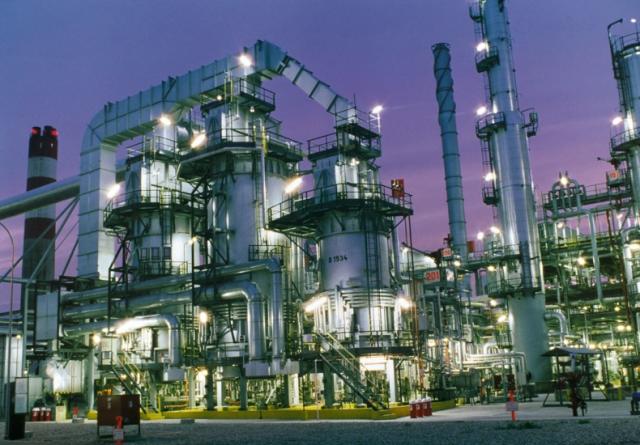
“Agip cleverly indicated that 4000 barrels of its production is affected by our attack. The reality is that close to 200,000 bpd of Nigerian crude exports is affected by our attack as that trunk line served to transport crude oil for other oil companies as well. This translates to a daily loss of at least 20 million us dollars”, it said.
“To the South African government, which expressed confidence in the ability of the Nigerian goveremment to handle insurgents like MEND, it said, “ we accept your challenge and will show you how easy it is to drive your investments out of our region. If the Nigerian government cannot protect companies like Shell and Chevron, how will they manage to protect an insignificant Sacoil?
“Within the next few weeks, the Movement for the Emancipation of the Niger Delta will carry out a few major attacks on oil installations to demonstrate to the world the helplessness of oil companies and the Nigerian military.
After these next attacks, there will be a brief pause as we await the time agreed upon by all groups in the delta for the resumption of hostilities in the Niger Delta”, Jomo Gbomo stated.

Gas shortage hampers Nigeria’s 5,000mw power aspiration


08 February 2012, Sweetcrude, ABUJA - Nigeria has now attained the installed capacity to generate 5,000 megawatts of electricity, Professor Barth Nnaji, the minister of power, has announced. But, he says lack of natural gas to fire the nation’s existing power stations has hampered the actual realisation of the target.
Speaking, Tuesday, at the Presidential Villa, Abuja, at the end of the meeting of the Economic Management Team, the minister reassured of government’s determination to ensure steady rise in power generation and supply in the country.
According to Nnaji, who also assured of a steady addition of at least 1,000 megawatts to the national grid yearly, the nation was now generating over 4,000 megawatts.
He disclosed that there had not been any system collapse this year, adding that, that has given him hope that power will soon become stable.
Nnaji said: “We are making progress in our efforts to make more power available to Nigerians. What we are interested in is whether Nigerians are getting more power and we can see this in terms of the quantum of power available.
“The good news is that we have not had any system collapse as we were used to having. In the Past, we have systems collapse about four times in one month,” he said.
“We had promised 1,000megwatts annually. That’s where we are now. We have over 5,000 megawatts installed capacity but we are not getting all due to gas supply problems”.
The minister, who also spoke on the ongoing privatisation in the power sector, stated that the federal government was still negotiating with Labour and that everything was being done for the smooth-running of the programme.

Nigeria sets up special task force on refineries


08 February 2012, Sweetcrude, Abuja - Mrs. Diezani Alison- Madueke, the Minister of Petroleum Resources, has set up a National Refineries Special Task Force to ensure self-sufficiency of petroleum products in Nigeria within a strong framework in the shortest possible time.
This was contained in a statement released by Alhaji Goni Sheik, the permanent secretary in the ministry of petroleum resources.
The statement disclosed that the National Refineries Special Task Force is charged with the following terms of reference:
“Without prejudice to the on-going programme of rehabilitation and turn-around maintenance of Port Harcourt, Warri and Kaduna Refineries, and the building of greenfield Refineries, the National Refineries Special Task Force is mandated to:
* Conduct a high level assessment of Port Harcourt, Warri and Kaduna Refineries, review all past reports and assessments and produce a Diagnostic Report complete with a Change Journey Map;
* Review the operations of Port Harcourt, Warri and Kaduna Refineries, with a view to improving efficiency and commercial viability. The findings of this review should be part of the Diagnostic Report;
* Work with a world-class firm to audit the finances of Port Harcourt, Warri and Kaduna Refineries, and produce audited accounts over the past 2 years ending 31st December, 2011;
* Design a template for Key Production / Management-Critical Performance Indicators to be tracked on a periodic basis for ministerial review;
* Design an automated information work bench, to monitor the performance of Port Harcourt, Warri and Kaduna Refineries on an online basis;
* Review all licenses issued for new refineries in Nigeria and assess their operational, technical, and financial readiness;
* Seek new ideas and design financial models across the value chain for the building of adequate capacity for meeting local demand for petroleum production;
* Design a blueprint for Public & Private Partnerships (PPP) to build small, medium to
large-scale greenfield refineries across Nigeria.
* Design investment models and a road map to self-sufficiency in local production of petroleum products in
Nigeria; and produce a report, complete with timelines and milestones within the next 60 working days.
The 22 members of the task force includes: Dr. Kalu Idika Kalu – Chairman; Mallam Yusuf Alli -Alternate Chairman; Professor Ayo Ogunye – Member; Mr. Imo Itsueli – Member; Engr. M.B. Shehu – Member; Engr. Olumuyiwa Ajibola – Member; Dr. N.J.D Erinne – Member; Engr. Alex Ogedengbe – Member; Mallam Bello Maccido – Member; Engr. Emeka Chikezie Ene – Member, Mr. Stanley Lawson – Member.
Others are: Mr. Akin Kekere-Ekun – Member; Arc. (Mrs.) Fatima Wali-Abdulrahman – Member; Mallam Abba Dabo – Member; Arc. Harcourt Adukeh – Member; Engr. (Mrs.) Mayen Adetiba – Member; Comrade Babatunde Ogun – Member; (President, PENGASSAN); Comrade Achese Igwe – Member
(President, NUPENG); GED, R&P, NNPC – Ex-officio; MD, Port Harcourt Refinery – Ex-officio; MD, Warri Refinery – Ex-officio and the MD, Kaduna Refinery – Ex-officio.

UBA Issues Profit Warning, May record Loss based on Zenon’s Non Performing Loans

·  By Afolabi Ogunde uba-bank-lagos-nigeriaUBA Plc, one of the top banks in the country, has issued a profit warning in respect of its 2011 Year End results.
Analysts are expecting the company to report a loss of anywhere between N 2 billion and N 12 billion for the 2011 year due to non performing loans it sold to the Asset Management Corporation of Nigeria (AMCON) at a steep discount.
One such loan was N 36 billion owed UBA by Femi Otedola’s Diesel trading company, Zenon. UBA was forced to write the loan off its book and sell it to AMCON for approximately N 21 billion, according to information provided by analysts at Nexus Capital.
“This represents a haircut of 40%”, says Soji Solanke of Renaissance Capital. “UBAs haircut was the highest relative to other banks on Zenon, and the highest haircut it took on any singular loan sold to AMCON.”
The Renaissance Capital Investment Analyst stated in an emailed report that UBA’s books are now very clean with only 3% non-performing loans and going forward in Q1, 2012, the bank would have to meet its forecasted profit in order to appease investors.
UBA disclosed to the Exchange today that it would make N 12 billion in the first three months of 2012.
The following is the full excerpt of a disclosure release the company provided the Nigerian Stock Exchange:
United Bank Africa Plc profit warning for FY11 and profit forecast for 1Q12
United Bank for Africa Plc hereby issues a profit warning for FY2011 in respect of its FY 2011 results following the preliminary review of the Group’s management accounts for the year ended 31st December 2011.
The Bank expects to announce a loss, driven principally by one-off writes against earnings, including those arising from the transfer of loans to the Asset Management Company of Nigeria (AMCON).
Management does not anticipate further similar write offs in 2012 and following these actions, affirms that the Group’s Balance sheet and Capital are in a robust position providing a solid foundation for the Group’s future growth path. Earnings from the underlying operations of the group’s Nigerian business give considerable grounds for optimism for the coming year and the group continues to witness significant growth in its operation across Africa with an increasing contribution to group profitability.
Accordingly, the group is increasingly confident on the outlook for FY 2012 with an indicative forecast profit before tax of NGN15bn for Q1 2012. January results have been impressive and confirm our belief that the forecasts will be achieved barring any unforeseen circumstances.
_end_
Shares of the company were down 5% today to close at N 1.99

Nuhu Ribadu appointed to head Nigeria’s petroleum revenue taskforce


*Steve Oronsaye, Olisa Agbakoba, others, members
Clara Nwachukwu

07 February 2012, Sweetcrude, Abuja -
The Federal Government on Tuesday, approved the appointment of Mallam Nuhu Ribadu, as chair of a 20-member newly established Petroleum Revenue Special Taskforce, in line with ongoing efforts to sanitise the corruption riddled, petroleum industry.
This is the first appointment to be accepted by the former Economic and Financial Crimes Commission, EFCC, boss, whose tenure at the anti graft agency drew accolades and condemnations during the former President Olusegun Obasanjo’s regime.
Other members of the revenue taskforce include former Secretary, Mr. Steve Oronsanye; Mallam Abba Kyari; Ns Benedicta Molokwu; Mr. Supo Sasore; Mr. Tony Idigbe; Mr. Anthony George-Ikoli; Dr (Mrs) Omolara Akanji; and Mr Olisa Agbakoba.
Also included are Mr. Ituah Ighodalo; Mr. Bon Otti; Mallam Samaila Zubairu; Mr. Ignatius Adegunle; and Mr. Gerald Ilukwe.
Members will also include representatives of the Federal Inland Revenue Services, FIRS; Federal Ministry of Finance Incorporated, Attorney General of th4 Federation/Minister of Justice; Accountant General of the Federation; Department of Petroleum Resources, DPR; and the Nigerian National Petroleum Corporation, NNPC.
In a statement signed by the Permanent Secretary, Ministry of Petroleum Resources, Goni Mohammed Sheik, said, the appointments are “Consistent with the policies and promises of President Goodluck Ebele Jonathan’s administration, and underpinned by the yearnings of the people of Nigeria for transparency in the Petroleum Industry.”
The statement quoted the Minister of Petroleum Resources, Mrs. Diezani Alison-Madueke, who set up the taskforce as saying that the move is “designed to enhance probity and accountability in the operations of the petroleum industry.”
However, analysts are of the view that the taskforce “is a mere duplication of functions, since there is already a Federal Government agency, the Nigerian Extractive Industry Transparency Initiative, NEITI, which by law, is empowered to perform these functions.”
In the recent terms, Nigerians were astounded at the high level of corruption associated in the operations of the oil and gas industry, on which the economy of Nigeria depends on.
In particular, the people were irked that government spent over N1.74trillion without appropriation for the payment of subsidy to oil marketers in 2011 alone, even as over N270billion remain outstanding, a development that led to the removal of subsidy on petrol on New Year day.
The Jonathan’s administration was therefore, challenged to walk the talk on his anti corruption stand to bring all those involved in the monumental sleaze to book.
Accordingly, the terms of reference for the revenue taskforce include:
• To work with consultants and experts to determine and verify all petroleum upstream and downstream revenues (taxes, royalties, etc) due and payable to government;
• To take all necessary steps to collect all debts due and owing; to obtain agreements and enforce payment terms by all oil industry operators;
• To design a cross debt matrix between all agencies and parastatals of the petroleum ministry;
• To develop an automated platform to enable effective tracking, monitoring and online validation of income and debt drivers of all parastatals and agencies in the petroleum ministry;
• To work with world class consultants to integrate systems and technology across the production chain to determine and monitor crude oil production and exports, ensuring at all times the integrity of payments to government; and;
• To submit monthly reports for ministerial review and further action/
It is however, not clear if the special revenue taskforce will be a permanent fixture of the petroleum ministry, as the tenure was not specified.

DPR’s N 30 billion Compensation Controversy: Senate Calls for Employees Register

 By Afolabi Ogunde
Senate-Chamber
After receiving startling revelations last week concerning the 2012 fiscal year N 30 billion compensation budget of the Department of Petroleum Resources (DPR), the Senate Committee on Petroleum Resources (Downstream) has ordered the DPR to submit its nominal roll or employees register.
The Senate committee plans to audit the register in order to comprehend the facts and figures in the 2012 compensation budget for the parastatal. Last week, the DPR defended the compensation metrics stating that it had 1,108 workers and planned to hire between 200 and 450 more over the course of the year.
That would still result in a ridiculous sum of about N 20 million per person. This does not augur with industry compensation standards, as some of the better managed and more profitable multi-nationals do not even compensate at these levels.
The Permanent Secretary, Ministry of Petroleum Resources, Goni Sheikh, as been mandated with the task of securing the register on behalf of the ministry.
Also yesterday, the Senate Committee lauded the Petroleum Minister for the selection of Ribadu and other members to head the Petroleum Revenue Special Task Force (PRSTF). He stated, “Please, convey my congratulations to the Minister for setting up the task force. I was very happy with the quality of people chosen to work on the PRSTF. I am particularly happy with the selection of Prof. Olusegun Okunnu who I know is an expert in restructuring.”

Jonathan Launches Dangote Ibese Cement Plant Thursday


President Goodluck Jonathan will on Thursday February 9 commission the multi-billion dollar new Dangote Cement plant, situated in Ibese, Ogun State. The new plant has an installed capacity of six million metric tons of cement per annum.
With the commissioning, Dangote Cement’s total capacity will be 20.25m metric tons of cement per annum with Obajana Cement producing 10.25 million metric tons and Gboko Plant with four million metric tons.
The opening of the Ibese cement plant, reputed to be the largest in Africa, would not only satisfy domestic demand, but also put Nigeria as a net exporter of the commodity.
‘We are marking the end of cement import in Nigeria with the coming on stream of our Ibese cement plant, which will produce 6 million tons per annum from its initial two lines, to be increased with another two lines immediately, jerking its production to 12 million tons per annum,’ the management of Dangote Cement said at the weekend.
President of the Dangote Group, Alhaji Aliko Dangote, had said his organisation was taking up the challenge to lead the way in making the nation self-reliant in cement production and, consequently, reduce its huge foreign exchange on imports.
According to him, Dangote Cement intends to move away completely from import of certain commodities, of which cement is one, by strengthening the local production capacity.
‘Our long-term ambition is to develop 46 million metric tons of production and terminal capacity in Africa by 2015. We want to become a truly pan-African champion in the sector, capable of competing globally with the largest cement companies in the world,’ he said.
Group Head Corporate Communication of the Dangote Group, Anthony Chiejina, said ‘considering that Nigeria’s cement need is between17 to 19 million tons per year, by implication, with the coming on stream of Ibese, what Dangote Group alone will be producing will be far more than the country’s demand.
Via TheMoment